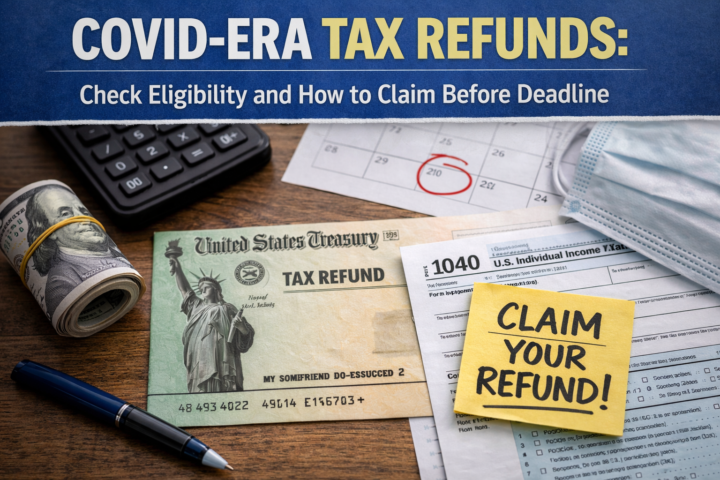
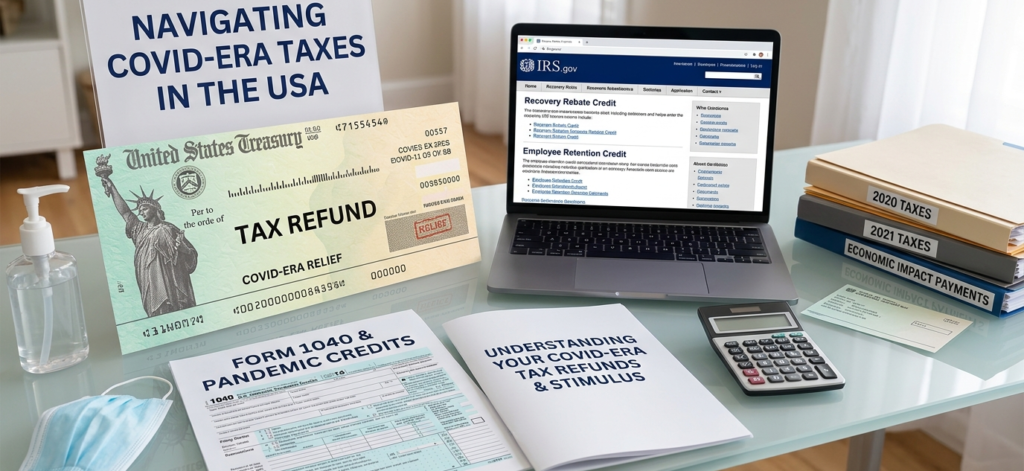
According to a federal court ruling, the IRS may have incorrectly charged fines and interest during the COVID-19 emergency, meaning millions of Americans may still be eligible for pandemic-era tax refunds. Tax filing deadlines for 2019, 2020, 2021, and 2022 should have been extended to July 10, 2023; those who submitted prior to that date but were still charged late penalties or fines may be eligible for a COVID-Era Tax Refunds.
What are COVID-Era Tax Refunds?
IRS COVID tax refunds are amounts the government may owe back to individuals or businesses because of tax rules, penalties, deadlines, and credits changed or newly interpreted during the COVID‑19 pandemic. In reality, they are not new money paying as a stimulus check but rather overpaid taxes, wrongly applied penalties, or unclaimed credits tied to pandemic‑period relief measures.
Key Court Ruling
A November 2025 U.S. Court of Federal Claims decision in Kwong v. United States ruled that COVID-19 declarations triggered automatic suspension of many federal tax deadlines under Section 7508A(d) from January 20, 2020, to July 10, 2023. This means the IRS did not have authority to assess failure-to-pay penalties, failure-to-file penalties, and underpayment interest for obligations due in that window. Taxpayers must act by July 10, 2026, due to the 3 year statute of limitations from the extended deadline.
Who is eligible for the COVID-era tax refund?
COVID-Era Tax Refunds are mainly for people or businesses that were charged penalties or interest on federal taxes during the pandemic, but who may now qualify for a refund because courts have re‑interpreted the applicable deadlines. In broad terms, you may qualify if:
COVID-Era Tax Refunds: key deadline?
The IRS COVID‑era refund 2026 deadline to claims in the U.S. is July 10, 2026. This means if you think the IRS charged you late‑filing or late‑payment penalties or interest during the pandemic years (2019–2022) and you now qualify for a refund, you must file a formal claim by that date. If you miss July 10, 2026, you usually lose the right to get that money back, even if the law later supports your case.
How to Claim Before Deadline
To claim a COVID‑era tax refund before the deadline, you basically need to prove that the IRS wrongly charged you penalties or interest during the pandemic and then file a formal request. In the U.S., the last date to do this for most people is July 10, 2026, so you must act by then.
| Step | What to Do | Key Details |
|---|---|---|
| 1 | Check your IRS records | Log in to your IRS online account or request a tax transcript for 2019–2022 to see if you paid late‑filing or late‑payment penalties or interest. |
| 2 | Fill out Form 843 | Use IRS Form 843, “Claim for Refund and Request for Abatement”, to ask for a refund of pandemic‑era penalties and interest. |
| 3 | Write a clear explanation | In the explanation box, mention the court ruling treating COVID‑19 as a disaster under Section 7508A(d) and state it is a protective claim before July 10, 2026. |
| 4 | Attach proof | Include copies of transcripts or notices showing the exact penalties or interest you paid. |
| 5 | Mail before deadline | Send the completed Form 843 to the IRS service center that handled your original return, before July 10, 2026; use certified mail for proof of mailing. |
Also Read: Americans could receive $1,200 tariff refund checks: Who qualifies under new bill
Why It Matters
This COVID‑era penalty refund matters because many people were charged extra tax penalties and interest during the COVID‑19 pandemic, even though the emergency should have protected them from those fees. If eligible taxpayers do not claim these refunds before the July 10, 2026 deadline, they may lose that money forever. For families and small businesses, getting this money back can help with bills, debt, or savings, which makes acting quickly very important.
FAQ’s
What are COVID‑era tax refunds?
COVID‑era tax refunds are refunds for penalties and interest that the IRS may have wrongly charged during the pandemic (roughly 2019–2022) when the COVID‑19 emergency should have extended tax deadlines and protected taxpayers from those fees.
Who can claim this refund?
You may qualify if you are an individual or a business that was charged late‑filing or late‑payment penalties or interest between January 20, 2020, and July 10, 2023, and your original return was filed before July 10, 2023.
What is the last date to claim IRS refund?
The last date to claim this refund is July 10, 2026.
How do I claim the refund?
I have shared the full detail above.
About The Author