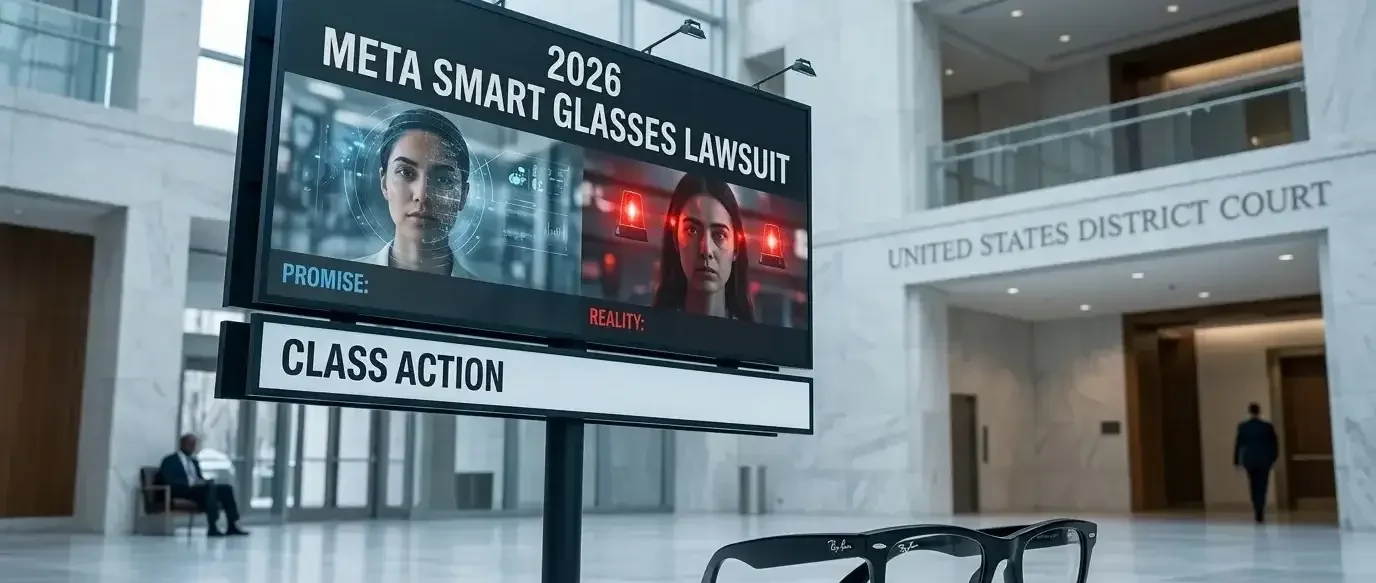
Meta, the company run by Mark Zuckerberg, is in serious trouble over the way it handles privacy on its Ray‑Ban smart glasses. A new lawsuit in the US accuses Meta of saying one thing about privacy in its ads and doing something very different behind the scenes. The glasses were marketed with language like “designed for privacy” and “you’re in control,” which makes most people think their videos stay between them and the device. In reality, when you use the AI features on these glasses, the photos and videos can be sent back to Meta’s servers and then shown to real humans who help train the AI.
What’s inside the lawsuit
- The Meta Ray-Ban Smart Glasses Lawsuit 2026 was filed in federal court in San Francisco on behalf of US buyers of Meta’s AI smart glasses, including named plaintiffs from New Jersey and California.
- It alleges Meta violated privacy and consumer protection laws and engaged in false advertising by promising the glasses were “designed for privacy, controlled by you” and “built for your privacy.”
- Claimants say they would not have bought the glasses if they had known that human contractors could watch and label their footage, including very private moments.
Meta AI Glasses Class‑Action Lawsuit 2026 Highlights
| Case Name | Gina Bartone et al. v. Meta Platforms, Inc. et al. |
| Plaintiffs | US buyers Gina Bartone (NJ), Mateo Canu (CA); represents 7M+ class . |
| Defendants | Meta Platforms & Luxottica (Ray-Ban partner) . |
| Core Issue | “Privacy-first” ads vs. reality: AI footage reviewed by Kenyan workers (nudity, sex, toilets seen) . |
| Claims | False advertising, unfair competition, consumer fraud laws . |
| Remedy Sought | Damages (unspecified), injunctions for disclosures/marketing fixes . |
| Status | Early stage; UK ICO also probing |
How smart‑glasses footage is used
- A Swedish investigation reported that a Kenyan subcontractor’s workers review videos captured when users activate the Meta AI assistant on the glasses, to label content for AI training.
- Workers said they saw intimate material such as nudity, sex, bathroom use, credit card numbers and identifiable faces, and that Meta’s claimed blurring and anonymization safeguards did not always work.
- The complaint argues this undisclosed “human review pipeline” turns the glasses into a “surveillance conduit” and creates risks like stalking, extortion, identity theft and reputational harm.
What the investigation found
- As per few Swedish newspapers, footage from Ray‑Ban Meta smart glasses is sent to Sama, a Kenya‑based subcontractor, where data annotators watch and label it to train Meta’s AI.
- Workers say they routinely see extremely sensitive content: people using the toilet, undressing, having sex, watching pornography, as well as bank cards and other identifiable details.
One Kenyan worker said “we see everything – from living rooms to naked bodies,” and added that most people likely have no idea strangers are viewing these clips.

How this led to a lawsuit
- After the Swedish reports, at least one proposed Meta AI Smart Glasses Class‑Action Lawsuit 2026 was filed in the US accusing Meta of misleading consumers about the privacy of its AI smart glasses.
- The suit argues Meta advertised the glasses as protecting user privacy, while failing to clearly disclose that human reviewers overseas could watch intimate recordings triggered by AI features.
- Regulators like the UK Information Commissioner’s Office have also written to Meta demanding explanations to check if its practices comply with data protection laws.
Also Read: $177 Million AT&T Data Breach Lawsuit
Meta’s Response so far
- Meta says Ray‑Ban Meta Glasses Lawsuit 2026 let you use AI hands‑free and that media stays on the device unless users choose to share it with Meta or others.
- The company acknowledges that when people share content with Meta AI, it “sometimes” uses contractors to review data to improve the service, and says it filters data and tries to strip identifying information.
- Regulators, including the UK Information Commissioner’s Office, have opened inquiries after these revelations about contractor review of smart‑glasses footage.
What the lawsuit is asking for
- Money damages for buyers who paid for the glasses under allegedly false or misleading privacy claims.
- An injunction forcing Meta to change how it collects and uses smart‑glasses data, stop the misleading marketing, and run corrective advertising to inform consumers of the true practices.
- Court orders that would require clearer disclosures and stronger limits on when and how human reviewers can access footage from the glasses.
Why it matters
This Meta smart glasses lawsuit 2026 matters because it exposes a hidden reality behind “privacy‑first” AI wearables and could reshape how tech companies handle our most intimate data. With over 7 million glasses sold in 2025 alone, millions of people unknowingly fed personal footage including from bedrooms and bathrooms into a human‑review pipeline for AI training, turning a personal gadget into what critics call a “surveillance conduit.”
Impact on consumers and bystanders
- It highlights how smart glasses record not just the wearer, but everyone around them, often without consent, risking emotional distress, extortion, or identity theft if footage leaks.
- The case forces a reckoning on consent: bystanders in your home or street have zero say in whether their image gets labeled by overseas workers, amplifying privacy fears in daily life.
Business and legal risks for Meta
- Meta’s core AI strategy relies on this kind of user data pipeline, so a win for plaintiffs could require massive changes like opt‑outs, better anonymization, or clearer disclosures, hitting revenue from ads and AI.
- It invites more regulatory scrutiny worldwide (UK ICO already probing), potentially leading to fines or bans on certain data practices under GDPR, CCPA, and similar laws.
Bigger picture for tech and AI
- This case tests whether “AI training” justifies human review of sensitive footage, and could set precedents for other wearables, always‑on cameras, and AI devices from Google, Apple, and beyond.
- It underscores the ethical cost of AI: low‑paid annotators exposed to disturbing content, while companies profit without full transparency.
Watch latest news on Youtube
Current status of the Meta smart glasses lawsuit
The Meta smart glasses privacy lawsuit, filed on March 4, 2026, in a San Francisco federal court by buyers Gina Bartone and Mateo Canu, is still in its early pretrial phase with no major rulings, hearings, or settlements reported as of April 2026. It accuses Meta and partners like EssilorLuxottica of false advertising by promoting the Ray-Ban Meta glasses as “designed for privacy” without disclosing that user videos could be reviewed by human contractors overseas for AI training. Meta defends the practice as opt-in with safeguards, but no formal court response is public yet, while related probes continue in the UK and Kenya.
About The Author