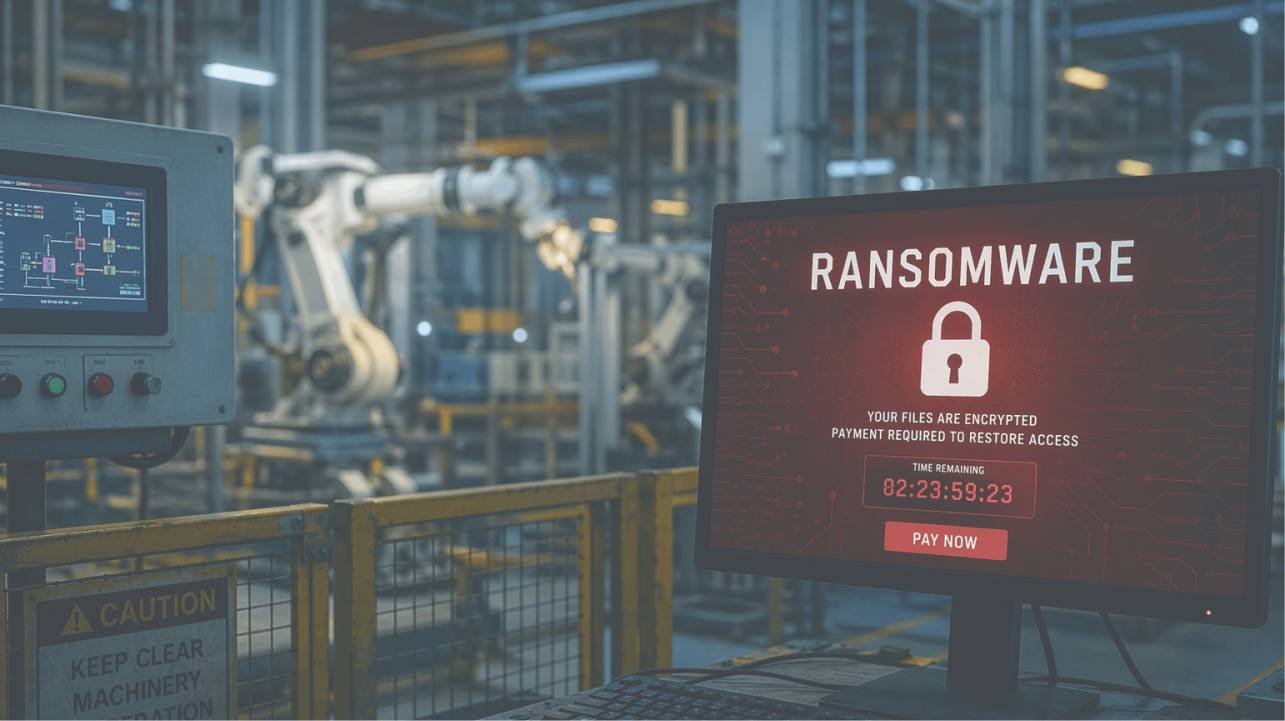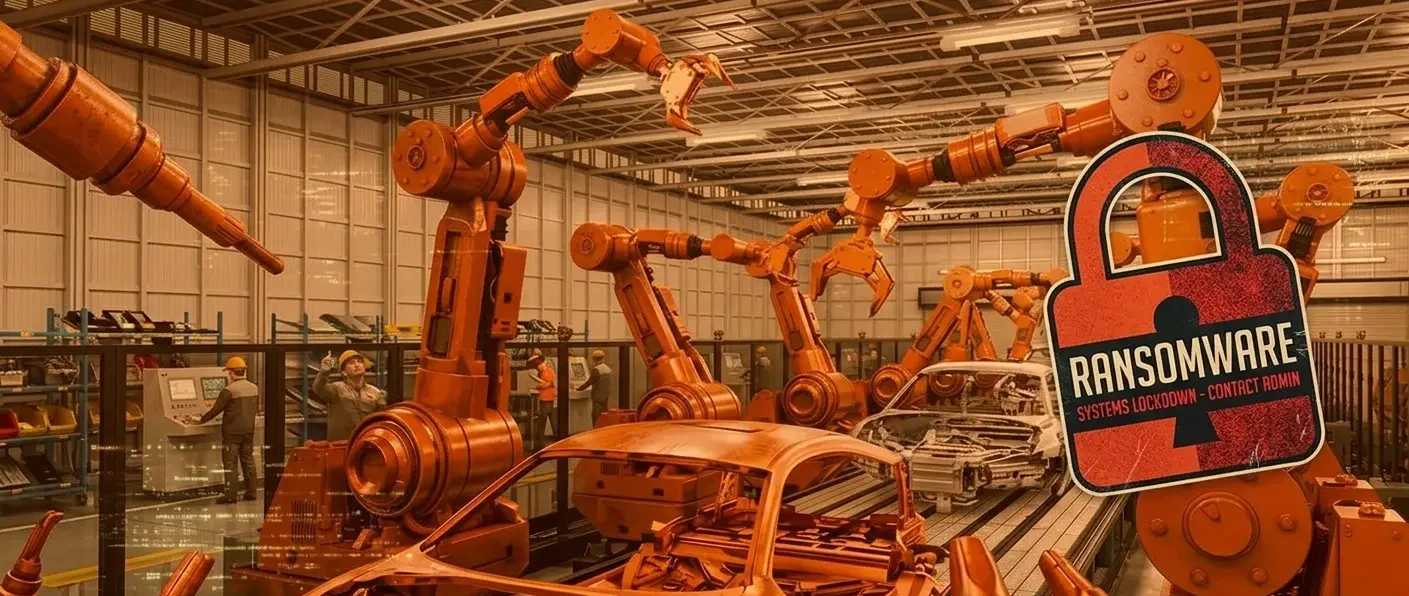
For years, many manufacturers viewed cybersecurity as primarily an IT concern. Their focus remained on production efficiency, supply chain management, quality control, and operational uptime. However, a growing wave of ransomware attacks against industrial organizations has changed that perspective dramatically.
In 2026, ransomware is no longer considered a distant threat affecting only large corporations or technology companies. Manufacturers of all sizes have become attractive targets for cybercriminals because operational disruptions can quickly translate into financial losses. As ransomware incidents continue to impact factories, production facilities, and industrial supply chains, more manufacturers are turning to cyber insurance as part of their overall risk management strategy.
The trend reflects a broader realization across the manufacturing sector: while cybersecurity investments remain essential, no organization can eliminate cyber risk entirely. Cyber insurance is increasingly viewed as a financial safety net that can help businesses recover when preventive measures fail.
Ransomware Surge in Manufacturing
Ransomware attacks on factories jumped big in 2025, making manufacturing the #1 target. Better defenses block some hits, but hackers now steal data too.
Quick Stats
- Attacks up 61% Jan-Sep 2025 (838 vs. 520 prior year).
- Full 2025: +56% to 1,466 incidents; demands doubled to $1.16M average.
- 72% of late-2025 industrial attacks hit factories.
Why So Many?
Hackers love factories’ old machines (OT systems) that are easy to break. Shutting down production costs millions a day, so many pay up, over half do. Groups like Akira and Qilin lead, using supply chain weak spots. Factories face tons of ransomware because their old equipment is easy to hack and downtime costs millions daily.
- Old Tech: Factory machines (OT/SCADA) mix with office networks (IT) but lack modern locks, hackers sneak in via gaps.
- Huge Losses: One hour stoppage = big money gone; supply chains break, forcing quick payments (over half pay $1M average).
- Valuable Secrets: Designs/recipes get stolen and leaked if no ransom paid (now 10% of attacks).
- Low Risk: No lives lost like hospitals, so less police/military response.
Impact of Attacks
Ransomware attacks on manufacturing cause massive operational disruptions, financial losses, and supply chain ripple effects due to vulnerable OT systems like ICS/SCADA. Average claims hit $199K, with funds transfer fraud at $303K and OT downtime amplifying costs exponentially. Impacts span financial, operational, reputational, and regulatory domains, with manufacturing facing 61% attack surge in 2025 (838 incidents Jan-Sep).
| Impact Category | Key Statistics | Details |
|---|---|---|
| Attack Volume | 838 incidents (Jan-Sep 2025, +61% YoY); 480 Q1 2025 (+13%); 1,171 total 2024 (69% industrial); 660 2024 (top industry) | Manufacturing leads; 68% Q1 2025 activity; 50% global critical infra hits |
| Financial Losses | $18B+ potential idle labor Q1-Q3 2025 (APAC $11.5B); $17B downtime since 2018; Avg ransom $1M + $1.3M recovery = $2.3M total | 51% paid ransoms; $199K avg claim, $303K fraud |
| Downtime/Operational | 13 days avg attack; 25% full OT shutdown, 75% partial disruption; 42 days dwell | Production halts, supply chain impaired; low downtime tolerance targeted |
| Data/Compliance | 39% data theft + encryption; 43.9M records compromised 2023 | IP theft, regulatory fines (HIPAA-like), legal fees |
| Recovery/Other | 65% hit 2024; 20% remote access exploits | Reputation damage, repeat risks, no data destruction guarantee |
Regional Breakdown (Q1-Q3 2025 Losses)
| Region | Idle Labor Losses | Source |
|---|---|---|
| APAC | $11.5B | Kaspersky/VDC |
| Europe | $4.4B | Kaspersky/VDC |
| LATAM | $711M | Kaspersky/VDC |
| Middle East | $685M | Kaspersky/VDC |
| CIS | $507M | Kaspersky/VDC |
| Africa | $446M | Kaspersky/VDC |
Cyber Insurance Uptake and Trends
Cyber insurance uptake in manufacturing has surged to 62% of firms in 2025 (up from 49% in 2024), driven by ransomware’s 76% share of losses despite a 53% claims drop in H1 2025. Trends show hardening premiums, OT-specific coverage, and stricter underwriting amid AI threats and vendor risks.
Uptake Drivers
Manufacturing’s 23.1% ransomware claim share (top sector) and $199K avg claim push adoption; 59% attacks from email, $303K BEC losses highlight gaps in legacy OT/ERP/SCADA.
Supply chain hits (46% losses) and third-party incidents (15-21%) expose vulnerabilities; 70% brokers predict 2026 premium hikes from AI/ransomware sophistication.
Key Trends 2025-2026
| Trend | Details | Implications |
|---|---|---|
| Claims Volume/Severity | -53% claims H1 2025; ransomware 76% losses (91% incl. vendor); avg $199K | Fewer claims from EDR/MFA/backups; higher severity strains limits |
| Underwriting Changes | Maturity proof (RTO/RPO tests, immutable backups); policy secrecy (attackers calibrate ransoms) | OT/ICS scrutiny; AI/phishing exclusions to cyber/Tech E&O |
| Coverage Evolutions | OT downtime, funds fraud ($303K avg), IP/PHI/HIPAA; supply chain extensions | Sub-limits/co-insurance common; vendor risk focus |
| Market Dynamics | $20.56B 2025 market; 62% adoption; 14% ransom payments (down from 22%) | Competitive hardening; governance priority for underinsurance |
| Emerging Risks | AI phishing 54% success; 1.8B credentials (800% YoY); social eng. 42% claims/88% losses | Multi-vector attacks <50 min breakout; strategic leadership needed |
Manufacturer-Specific Coverages
Policies now address unique exposures: HMI/PLC control loss (asset damage/injury), SCADA web-discoverability, ERP master data theft, end-of-life vulns. Insurers like Coalition/CFC provide digital restoration, fines, victim aid; recovery forensics $10K-$millions based on complexity.
How Ransomware Has Changed Risk Perceptions
Historically, some manufacturing organizations believed cyberattacks primarily targeted financial institutions, healthcare providers, or government agencies.
Recent ransomware incidents have demonstrated that industrial organizations are equally vulnerable.
Executives increasingly recognize that a cyber incident can create:
- Revenue losses
- Operational disruptions
- Recovery expenses
- Legal costs
- Regulatory obligations
- Reputational damage
As a result, cybersecurity discussions are moving beyond IT departments and into executive boardrooms.
Manufacturing leaders now view cyber risk as a business risk rather than solely a technology issue.
This shift in perspective is contributing to increased interest in cyber insurance coverage.
What Cyber Insurance Provides
Cyber insurance is designed to help organizations manage the financial consequences of cyber incidents.
While policies vary, cyber insurance may provide coverage for:
Incident Response Costs
Organizations often require assistance from:
- Digital forensic investigators
- Incident response specialists
- Cybersecurity consultants
- Breach attorneys
Cyber insurance can help cover these expenses.
Business Interruption Losses
One of the most important coverage areas for manufacturers is business interruption protection.
If a ransomware attack halts production, insurance may help offset lost income during the recovery period, depending on policy terms.
Data Recovery and Restoration
Recovering systems and restoring data can be costly and time-consuming.
Coverage may include expenses associated with rebuilding systems and recovering operational capabilities.
Legal and Regulatory Costs
Cyber incidents sometimes trigger investigations, contractual disputes, or regulatory obligations.
Insurance policies may help cover associated legal expenses.
Public Relations Support
Following a major cyber event, organizations may need assistance managing communications with customers, partners, investors, and the public.
Cyber Insurance Is Not a Substitute for Security
One misconception that persists within some organizations is that cyber insurance can replace cybersecurity investments.
Insurance providers strongly disagree.
In fact, insurers increasingly require organizations to demonstrate cybersecurity maturity before issuing or renewing coverage.
Many carriers evaluate whether applicants have implemented:
- Multi-factor authentication (MFA)
- Endpoint protection solutions
- Security awareness training
- Data backup procedures
- Vulnerability management programs
- Incident response plans
- Access control policies
Manufacturers that fail to implement basic security controls may face:
- Higher premiums
- Lower coverage limits
- Coverage exclusions
- Difficulty obtaining insurance
As a result, cybersecurity and cyber insurance have become closely linked.
Key 2026 Predictions
Ransomware will keep hitting manufacturing hard in 2026, with cyber insurance getting stricter and pricier. Attackers will use smarter AI tricks, and companies need better backups and vendor checks to stay covered.
Smarter Attacks: Ransomware groups will split into more small teams using AI to dodge defenses and steal data fast, targeting old factory systems for big shutdowns.
Higher Costs: Insurance premiums rise 10%+ for risky factories; renewals feel like audits needing proof of backups, training, and quick recovery plans.
Wrap-up
Ransomware attacks have fundamentally changed how manufacturers view cyber risk. What was once considered a technology issue is now recognized as a business challenge capable of disrupting production, affecting revenue, and damaging customer relationships.
As a result, more manufacturers are purchasing cyber insurance to help manage the financial consequences of cyber incidents. Coverage for business interruption, incident response, recovery costs, and legal expenses can provide valuable support during a major cyber event.
However, cyber insurance is most effective when combined with strong cybersecurity practices. Insurers increasingly expect manufacturers to implement security controls, employee training programs, incident response plans, and resilience strategies before coverage is issued.
For modern manufacturers, the goal is not simply to prevent cyberattacks. It is to build an organization capable of withstanding, responding to, and recovering from them. Cyber insurance has become an increasingly important part of achieving that objective.
FAQ’s- Cyber Armada
What Counts as a Ransomware Attack?
Ransomware encrypts data or locks systems, demanding payment; in manufacturing, it hits production lines via phishing or exploited vulnerabilities, halting output. Double extortion adds data leaks for leverage.
Why Target Manufacturing?
Interconnected ICS/SCADA and legacy gear offer high disruption value, with average downtime costs exceeding $1M daily for large plants. M&A integrations create weak points.
Does Cyber Insurance Cover Ransomware?
Yes, Cyber Insurance cover Ransomware too.
How Has Uptake Changed?
Post-attack awareness surged buys by 33-48% in sectors like manufacturing, with market growing to $118B by 2032 amid stable rates.
About The Author