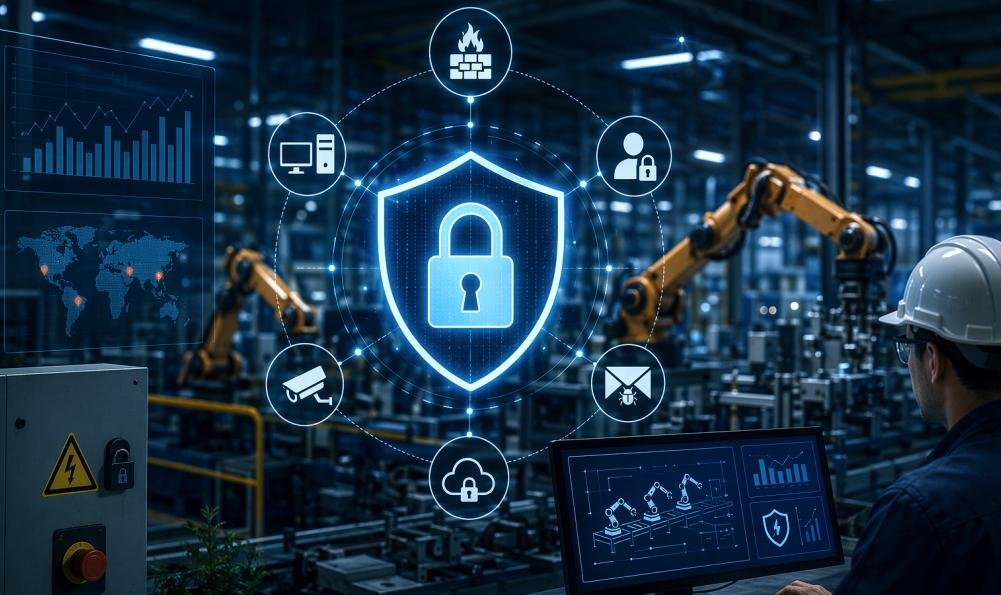
Cybersecurity for Small Manufacturers: For many small manufacturers, cybersecurity still feels like a problem that primarily affects large corporations, government agencies, or global enterprises. Unfortunately, cybercriminals do not see it that way. Over the last several years, manufacturing has become one of the most frequently targeted industries because production environments often combine valuable business data, connected equipment, third-party supplier relationships, and operational systems that cannot afford extended downtime. For attackers, that combination creates an opportunity. For manufacturers, it creates a growing business risk that can no longer be ignored.
The reality is that a cyberattack does not need to involve millions of stolen records to cause serious damage. A single ransomware infection, compromised email account, or supplier-related breach can disrupt production schedules, delay customer orders, and create unexpected recovery costs. Many small manufacturers operate with lean teams and tight margins, making them especially vulnerable to the operational and financial consequences of a cybersecurity incident. As digital transformation continues across the manufacturing sector in 2026, cybersecurity is becoming just as important as quality control, workplace safety, and supply chain management.
Why Manufacturers Have Become Prime Targets for Cybercriminals
Manufacturing companies occupy a unique position in the modern economy. They are connected to suppliers, logistics providers, customers, contractors, software vendors, and in some cases government agencies. Each connection creates opportunities for collaboration and efficiency, but it also expands the potential attack surface that cybercriminals can exploit.
Unlike many office-based businesses, manufacturers often depend on systems that support daily operations and production activities. If those systems become unavailable, the consequences are immediate. Production lines may stop, shipping schedules may be disrupted, and employees may be unable to access critical information needed to perform their jobs. Attackers understand this pressure. They know manufacturers are more likely to experience significant financial losses from downtime, which is one reason ransomware groups continue to focus heavily on the sector.
Many manufacturers also possess valuable information that extends beyond customer and financial records. Product designs, engineering specifications, proprietary manufacturing processes, supplier contracts, and pricing information can all be attractive targets. In some cases, cybercriminals seek direct financial gain. In others, stolen information may be sold, leaked, or used for competitive advantage.
A Common Scenario: How a Small Manufacturer Can Be Compromised
Consider a hypothetical machine shop employing approximately 40 people. The company has invested in modern production equipment and uses cloud-based accounting software, email, and inventory management systems. Like many small businesses, cybersecurity responsibilities are handled by a small IT team or an external provider.
One morning, an employee receives an email that appears to come from a trusted supplier. The message references an invoice and requests a quick review of an attached document. Because the supplier is familiar and the email appears legitimate, the employee opens the attachment without hesitation.
The file installs malicious software that quietly begins collecting login credentials. Within hours, attackers gain access to multiple business systems. Several days later, critical files are encrypted by ransomware, employees lose access to production data, and operations come to a halt. Customer deliveries are delayed, emergency IT services are required, and management is forced to make difficult decisions while attempting to restore business operations.
This type of incident is not unusual. In fact, many successful cyberattacks begin with something as simple as a deceptive email and a momentary lapse in judgment.
Common Cybersecurity Threats for Manufacturers
| Threat | How It Affects Manufacturers |
|---|---|
| Phishing Emails | Employees may unknowingly provide login credentials or download malware. |
| Ransomware | Production systems and business files can become inaccessible, causing downtime. |
| Credential Theft | Stolen usernames and passwords can provide attackers with unauthorized access. |
| Supply Chain Attacks | Vulnerabilities at vendors or suppliers may expose multiple businesses. |
| Insider Threats | Employees or contractors may accidentally or intentionally compromise data. |
Phishing remains one of the most effective attack methods used by cybercriminals because it targets people rather than technology. Attackers frequently impersonate suppliers, shipping companies, financial institutions, customers, or even company executives. Their objective may be to steal passwords, distribute malware, or trick employees into transferring money. Because manufacturing businesses communicate with numerous external partners every day, fraudulent emails can easily blend into normal business activity.
Ransomware continues to be another major concern. Once attackers gain access to a network, they may encrypt files and demand payment in exchange for restoring access. Even organizations that maintain backups can face significant disruption while systems are investigated, restored, and secured. For manufacturers, downtime often represents the most expensive aspect of a ransomware incident because every hour of lost production can affect revenue and customer relationships.
Credential theft is also increasingly common. Employees frequently reuse passwords across multiple services, making compromised credentials a valuable asset for attackers. If login information from one service is exposed through a third-party breach, attackers may attempt to use those same credentials to access company email accounts, cloud platforms, and internal systems.
Supply chain attacks represent another growing threat. Manufacturers rarely operate independently. They rely on software vendors, managed service providers, logistics partners, and suppliers that may have some level of access to company systems or information. A security weakness within one of these organizations can become a pathway into multiple businesses throughout the supply chain.
The Business Impact Extends Beyond IT
One of the biggest misconceptions about cybersecurity is that it is purely a technology issue. In reality, cybersecurity incidents often affect every part of the organization. When systems become unavailable, production schedules may be interrupted. Customer service teams may struggle to provide updates. Accounting departments may lose access to financial records. Management may be forced to divert attention away from strategic priorities to focus on crisis response.
Financial losses can accumulate quickly. Recovery costs may include forensic investigations, system restoration, legal consultations, regulatory reporting, and external cybersecurity expertise. Customer trust can also suffer if sensitive information is exposed or if contractual obligations cannot be fulfilled. For manufacturers operating in highly competitive industries, reputational damage may continue long after technical systems have been restored.
This broader impact is why cybersecurity should be viewed as a business continuity issue rather than simply an IT responsibility.
Building a Strong Cybersecurity Foundation
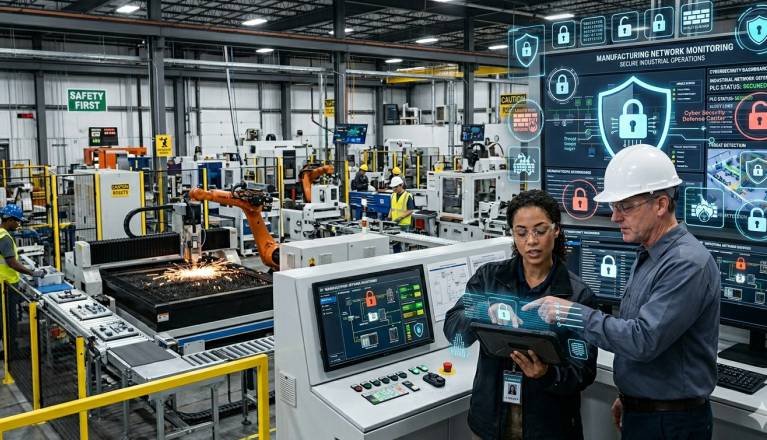
The good news is that effective cybersecurity does not always require a large budget or a dedicated security department. Many of the most valuable protections are practical measures that can be implemented consistently over time.
One of the most important steps is enabling multi-factor authentication (MFA). MFA adds an additional layer of security beyond passwords by requiring users to verify their identity through a second method, such as a mobile device or authentication application. Even if a password is stolen, attackers face an additional barrier that can prevent unauthorized access.
Organizations should also maintain a disciplined approach to software updates and vulnerability management. Cybercriminals frequently exploit known software weaknesses that already have available security patches. When updates are delayed for weeks or months, businesses leave themselves exposed to risks that could have been addressed relatively easily.
Reliable backups remain another essential safeguard. Manufacturers should maintain secure backups of critical data and regularly test recovery procedures. A backup strategy is only effective if systems can actually be restored when needed. Testing provides confidence that recovery objectives can be achieved during an emergency.
Access control is equally important. Employees should only have access to the systems and information required for their responsibilities. Restricting unnecessary privileges reduces the potential impact of compromised accounts and helps limit opportunities for unauthorized activity.
Essential Cybersecurity Measures for Small Manufacturers
| Security Measure | Why It Matters |
| Multi-Factor Authentication (MFA) | Prevents unauthorized access even if passwords are stolen. |
| Regular Software Updates | Reduces exposure to known vulnerabilities. |
| Secure Data Backups | Helps recover quickly after ransomware or system failures. |
| Access Control Policies | Limits the impact of compromised accounts. |
| Employee Security Training | Reduces phishing and social engineering risks. |
| Incident Response Plan | Improves recovery speed during a cyber incident. |
| Vendor Risk Reviews | Helps identify third-party cybersecurity weaknesses. |
Why Employee Awareness Matters More Than Ever
Technology can help prevent many attacks, but people continue to play a central role in cybersecurity. Employees are often the first line of defense against phishing attempts, social engineering tactics, and fraudulent requests. Unfortunately, they can also become the first point of failure if adequate training is not provided.
Many organizations still treat security awareness training as an annual compliance exercise. A more effective approach involves ongoing education that helps employees recognize evolving threats and understand how to respond appropriately. Short, practical training sessions delivered throughout the year often produce better results than lengthy presentations conducted once annually.
Employees should understand how to identify suspicious emails, verify unusual requests, protect sensitive information, and report potential security incidents promptly. Building a security-conscious culture helps reduce risk across the entire organization.
Preparing for the Incident You Hope Never Happens
Even organizations with strong cybersecurity programs can experience security incidents. For that reason, preparation is critical. An incident response plan provides a structured approach for managing cybersecurity events and reducing confusion during high-pressure situations.
An effective plan should identify key decision-makers, define communication responsibilities, establish recovery priorities, and outline procedures for engaging external experts when necessary. It should also address how customers, suppliers, and stakeholders will be informed if a significant incident occurs.
Organizations that prepare in advance typically recover faster and experience less operational disruption than those attempting to develop a response strategy during an active crisis.
Understanding Compliance Requirements
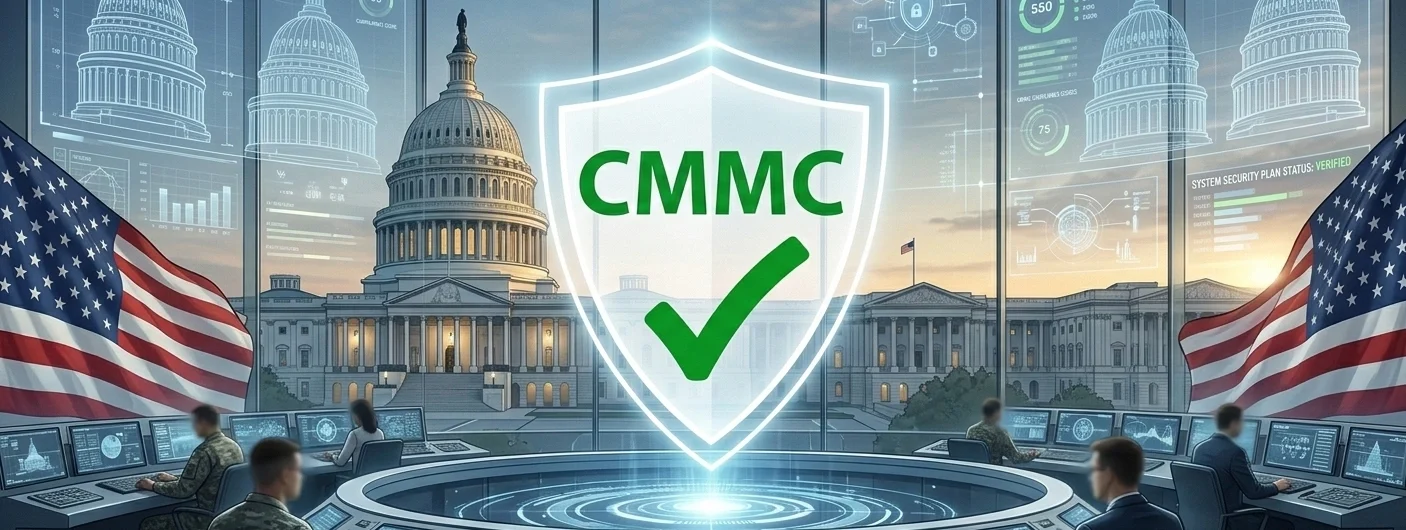
For many manufacturers, cybersecurity is not only a best practice but also a contractual requirement. Organizations that work with government agencies or defense contractors may be required to comply with frameworks such as NIST SP 800-171 or the Cybersecurity Maturity Model Certification (CMMC) program. These frameworks are designed to protect sensitive information and establish baseline security expectations across the defense industrial base.
Even manufacturers that are not directly subject to regulatory requirements can benefit from adopting recognized cybersecurity frameworks. These standards provide structured guidance for managing risk, improving security controls, and demonstrating commitment to protecting customer and business information.
Rather than viewing compliance as a paperwork exercise, organizations should see it as an opportunity to strengthen their overall cybersecurity posture.
Wrapping-up
Cybersecurity has become a business necessity for manufacturers of every size. The increasing use of connected systems, cloud applications, digital supply chains, and remote access technologies has created new opportunities for growth, but it has also introduced new risks that cannot be ignored. While no organization can eliminate every threat, manufacturers can dramatically improve their resilience by implementing practical security controls, educating employees, maintaining reliable backups, and preparing for potential incidents before they occur.
The organizations that approach cybersecurity proactively are often the ones that recover fastest, experience fewer disruptions, and maintain stronger relationships with customers and partners. In 2026, cybersecurity is no longer just about protecting technology. It is about protecting production, revenue, reputation, and the long-term future of the business.
FAQ’s on Cybersecurity for Small Manufacturers
What is the biggest cybersecurity risk for small manufacturers?
Ransomware remains one of the most significant risks because it can disrupt production, lock critical files, and create costly downtime.
Do small manufacturers need multi-factor authentication?
Yes. MFA is one of the most effective and affordable security controls available and helps protect accounts even when passwords are compromised.
How often should employees receive cybersecurity training?
Security awareness training should be ongoing throughout the year rather than limited to a single annual session.
Can cybersecurity frameworks help small businesses?
Yes. Frameworks such as NIST SP 800-171 and CMMC provide structured guidance that can help organizations improve security and manage risk.
Disclaimer
This article is provided for informational purposes only and should not be considered legal, regulatory, compliance, or cybersecurity advice. Every organization has unique risks and requirements. Businesses should consult qualified cybersecurity and compliance professionals before making security-related decisions.
Official Sources
- Cybersecurity and Infrastructure Security Agency (CISA)
- National Institute of Standards and Technology (NIST)
- NIST SP 800-171 Guidance
- Department of Defense CMMC Program
- Federal Bureau of Investigation Cyber Division
About The Author