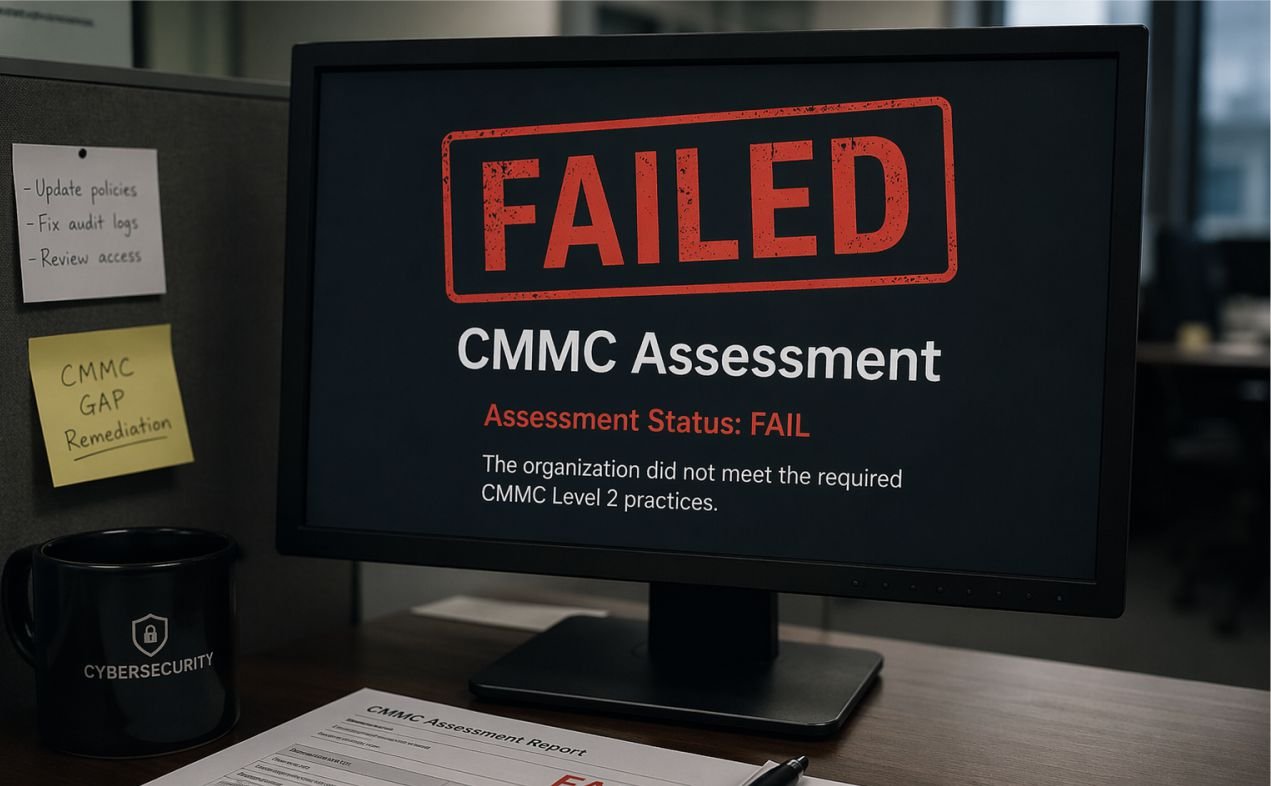
AI Cybersecurity Alert: Sam Altman (CEO of OpenAI) has warned people that advanced AI will lead to an “world‑shaking cyberattack” as early as this year due to the advance ability of AI to find software flaws. According to Altman, based on a recent media interview & accompanying policy proposal; “It’s very likely that major attacks assisted by AI will significantly impact large institutions & infrastructure in the near future.”
What Altman is warning about
Sam Altman has expressed concerns regarding advanced AI technologies that will soon be powerful enough to be used in ways that can inflict significant, real-world damage both immediately, and well into the future. He describes AI as a dual-use technology, with its productivity-enhancing features also potentially enhancing the effectiveness of cyber attacks, biological attacks, and social manipulation if they fall into the wrong hands.
Immediate risks he highlights
- Altman shares that hackers can now use AI to automatically finding serious security flaws and execute large scale hacking attempts on organizations such as governmental agencies and companies that run the world’s infrastructure. This allows for quick and devastating attacks against any agency or organization.
- Lowering the ability of less-skilled individuals to access high-end biological agents through the use of AIs will lead to less-skilled people being able to design, create, and manipulate biological agents.
Deeper systemic worries
- According to Altman, the development of AI, exceeds the rate of development of safety, governance, and regulation, causing society to “sleepwalk” into giving AI systems the authority to perform risky tasks without adequate control.
- He expressed his concern about the potential impact of AI systems on an individual’s mental health and on society as a whole, including people potentially becoming overly reliant on AI companions or being led to engage in riskier behaviours as a result of AI systems providing an unusually intimate and persuasive manner of interacting with them.
What Altman actually said- Watch on YouTube
AI Cybersecurity Alert: Why he thinks attacks could come in 2026
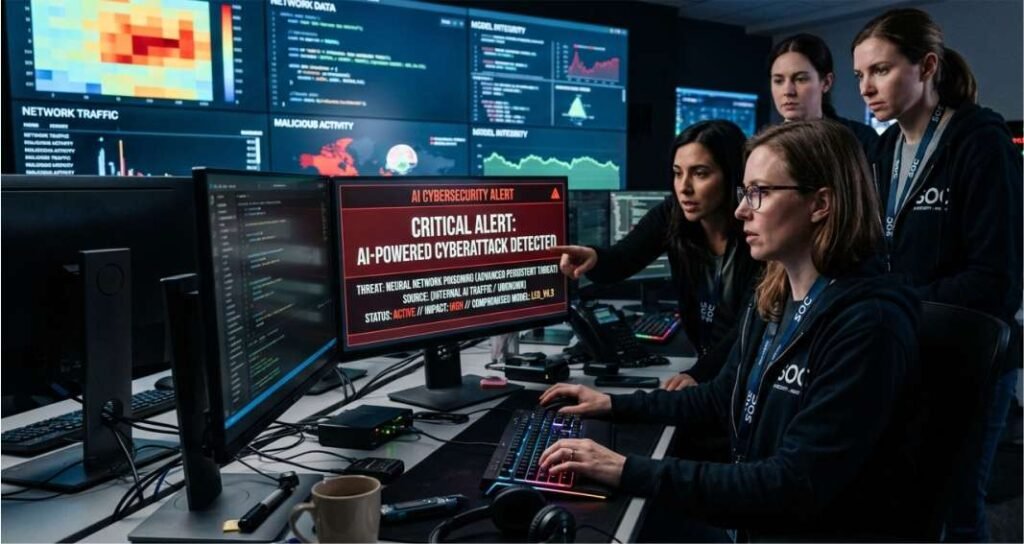
According to Sam Altman, cyberattacks that could be caused by artificial intelligence (AI), may happen soon, some have already begun. Since newer AIs can can automatically find and exploit software vulnerabilities at scale, networks, and application programming interfaces (APIs) much faster than a person can, they give access to large-scale breaches in critical infrastructure, government agencies, banking and other industries.
Cybersecurity protection tools are not advancing as fast as the AI offensive tools that are creating cyberattacks. Many organizations are therefore unprepared for AI-enhanced cyberattacks which can take down entire industries with very little notice, so in my opinion they must look at AI Cybersecurity Alert on priority basis.
Also Read: Why you need Cyber Insurance and what you should know
What this means for your country and you
According to the U.S. government, Altman’s AI Cybersecurity Alert suggests that there is a real risk to the U.S. due to an AI-enabled cyber-attack, as these attackers use AI agents to automate up to 90% of some types of cyber-attacks and can conduct mass scale attacks much faster and more adaptively than they could without using AI-specific tools.
Furthermore, there is a surge in AI phishing, deepfake scams, ransomware and agentic malware currently being used against American companies and government agencies with many companies not yet having established well-defined AI security policies which will leave them vulnerable to global level disruptive events.
So according to me, this should be taken into account by you on an individual basis when considering how any breach or cyber-attack that occurs in the U.S. may impact you since we are all part of a global digital ecosystem. Therefore, when using the cloud, SaaS tools, payment processors or other services that you regularly use, the risk of having your account accessed through stolen authentication details by an attacker can impact you as the attacker may complete their attack using these types of services that you rely on every day.
You need to treat your online accounts, passwords and devices as your first line of defence and use strong forms of multi-factor authentication; carefully handle any AI-generated messages and links; and develop content that will educate your audience about the real-world value of AI-driven cyber-attacks (not just the theoretical value).
Final Words
As per me, Altman’s AI Cybersecurity Alert usually indicates multiple instances of impending “doom,” rather than solely one instance. AI can now be used to rapidly drive or destroy an object faster and at a more extensive and less costly rate. Your main takeaway should be to always consider AI to be a high-leverage tool with very clear guardrails, because the next major instance of cyber shock or social disturbance may well involve AI, as well as human errors.
FAQ’s on AI Cybersecurity Alert
What is Sam Altman warning about?
Sam Altman warns about the potential for the use of very powerful AI to make large-scale cyberattacks or to manipulate individuals on a large scale much sooner than we might think.
Could an AI cyberattack happen this year?
Experts have told Altman that AI attacks on critical infrastructure could occur by 2026. Thus, this year, it’s absolutely possible.
In what way does AI make hacking more dangerous?
AI can find software flaws, produce phishing email content, and carry out attacks on an automated basis, all at a much lower cost, than someone manually trying to hack a system.
What can i do?
To overcome AI Cybersecurity Alert, you must use passwords that are very difficult to crack, enable multi-factor authentication, be careful with links in email you don’t recognize, and regularly update all software.
About The Author