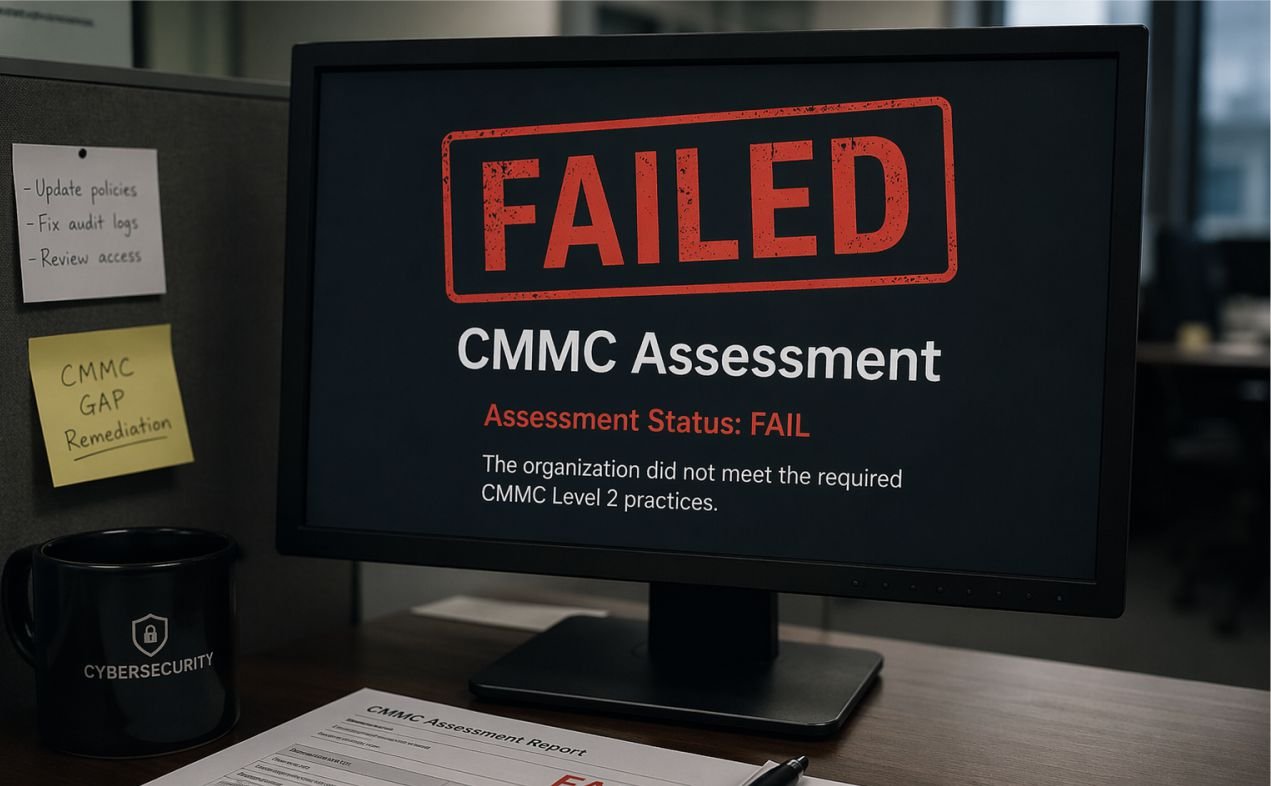
Common CMMC Assessment Failures: Achieving CMMC compliance is about much more than implementing cybersecurity tools. Many defense contractors begin preparing for an assessment believing that a strong technical environment will be enough to satisfy requirements. In reality, assessors evaluate how cybersecurity practices are documented, managed, and maintained over time. Organizations often discover that their biggest challenges are not technical weaknesses but gaps in documentation, evidence collection, and internal processes.
The good news is that most assessment findings are preventable. By understanding where organizations commonly struggle, defense contractors can focus their efforts on the areas most likely to impact assessment readiness and certification success.
Why Organizations Fail CMMC Assessments
A common misconception is that compliance and cybersecurity are the same thing. While strong security controls are essential, assessors also need to verify that those controls are operating consistently and are supported by documentation and evidence. An organization may have multi-factor authentication enabled, conduct vulnerability scans, and provide employee training, but still face findings if it cannot demonstrate those activities during an assessment.
Successful organizations typically maintain a balance between technology, documentation, and operational processes. When one of those elements falls behind, compliance gaps become more likely.
Outdated Documentation Creates Unnecessary Risk
One of the most frequent issues identified during readiness reviews is documentation that no longer reflects the actual environment. Technology changes quickly. Organizations adopt cloud services, replace software platforms, and modify business processes. Documentation often does not keep pace with those changes.
When assessors review System Security Plans, network diagrams, policies, and procedures, they expect those documents to accurately represent the current environment. If documentation references systems that no longer exist or fails to include recently implemented technologies, additional questions and validation efforts are often required.
Organizations can reduce this risk by reviewing critical compliance documents throughout the year rather than waiting until assessment preparation begins.

Evidence Collection Is Often More Difficult Than Expected
Many organizations perform required cybersecurity activities but underestimate the importance of retaining evidence. Security awareness training may be completed successfully, vulnerability scans may occur regularly, and access reviews may be conducted on schedule. However, when assessors request documentation, teams sometimes discover that records are stored in multiple locations or were never formally retained.
Evidence management becomes significantly easier when organizations establish a centralized repository for compliance records. Maintaining documentation throughout the year allows teams to focus on improving security rather than searching for reports and screenshots during assessment preparation.
| Common Evidence Request | Purpose |
|---|---|
| Security Awareness Records | Verify employee training |
| Vulnerability Reports | Validate risk management |
| Access Review Records | Confirm account oversight |
| Incident Response Documentation | Demonstrate preparedness |
| Audit Logs | Verify monitoring activities |
Access Control Remains a Common Challenge
Access control continues to be one of the most closely examined areas during CMMC assessments. Over time, organizations naturally accumulate permissions as employees change roles, contractors join projects, and new systems are introduced. Without regular reviews, users may retain access that is no longer necessary.
Excessive privileges increase both cybersecurity risk and compliance risk. Assessors want to see evidence that organizations are actively reviewing and managing access rights. Regular account reviews, removal of inactive accounts, and enforcement of least-privilege principles help demonstrate that access is being controlled appropriately.
Asset Management Cannot Be Ignored
Every cybersecurity program depends on knowing what systems, devices, applications, and services exist within the environment. Yet incomplete asset inventories remain a common issue across organizations of all sizes. Untracked assets may not receive updates, vulnerability scans, or security monitoring, creating unnecessary exposure.
Accurate inventories provide the foundation for many other security practices. They help organizations apply controls consistently and ensure that systems handling Controlled Unclassified Information (CUI) receive appropriate protection.
Vulnerability Management Requires a Repeatable Process
Running vulnerability scans is only one part of an effective vulnerability management program. Assessors are generally interested in understanding how identified vulnerabilities are reviewed, prioritized, remediated, and verified. Finding vulnerabilities is expected; leaving them unresolved without a documented plan creates concern.
Organizations should maintain records showing how vulnerabilities are evaluated and what actions were taken to address them. This demonstrates that cybersecurity risks are being managed proactively rather than only during assessment preparation.
| Common Vulnerability Issue | Potential Impact |
| Missing Critical Patches | Increased security risk |
| Unsupported Software | Compliance concerns |
| No Remediation Tracking | Assessment findings |
| Inconsistent Scanning | Reduced visibility |
| Lack of Risk Prioritization | Delayed remediation |
Training and Incident Response Matter More Than Many Organizations Realize
Technology alone cannot protect sensitive information. Employees play a critical role in cybersecurity, which is why training and awareness remain important components of CMMC assessments. Security awareness programs help personnel recognize threats, follow company policies, and understand their responsibilities when handling sensitive information.
Incident response readiness is equally important. Many organizations have documented incident response plans, but fewer organizations regularly test those plans. Tabletop exercises help identify communication gaps, unclear responsibilities, and procedural weaknesses before a real incident occurs. Testing also provides valuable evidence that can support assessment activities.
Compliance Should Be an Ongoing Business Process
One of the biggest mistakes organizations make is treating CMMC compliance as a project that begins shortly before an assessment. This approach often results in rushed documentation updates, incomplete evidence collection, and unnecessary stress. Organizations that integrate compliance activities into their normal operations tend to experience smoother assessments and stronger security outcomes.
Maintaining documentation, collecting evidence, reviewing access, and tracking vulnerabilities throughout the year reduces the workload associated with assessment preparation. More importantly, it helps ensure that cybersecurity practices remain effective long after certification has been achieved.
Final Thoughts
Most CMMC assessment failures are not caused by advanced technical problems. More often, they stem from documentation gaps, missing evidence, weak access management, incomplete asset inventories, or inconsistent operational practices. These issues are generally easier to address when organizations take a proactive approach to compliance.
By maintaining accurate documentation, collecting evidence continuously, managing vulnerabilities effectively, and treating cybersecurity as an ongoing responsibility, organizations can improve assessment readiness and strengthen their overall security posture.
Common CMMC Assessment Failures- FAQ’s
What is the most common reason organizations struggle during a CMMC assessment?
Documentation and evidence management are among the most common challenges. Many organizations perform required activities but cannot easily demonstrate them during an assessment.
Can an organization fail a CMMC assessment because of documentation issues?
Yes. Assessors evaluate both implementation and documentation. If required processes cannot be supported by accurate documentation and evidence, findings may occur even when technical controls exist.
How far in advance should organizations prepare for a CMMC assessment?
Many organizations begin formal readiness activities six to twelve months before an assessment. The exact timeline depends on the complexity of the environment and the number of gaps that need remediation.
What evidence do CMMC assessors typically request?
Assessors commonly request System Security Plans, training records, vulnerability reports, access review documentation, audit logs, incident response records, and policy documentation.
Is CMMC compliance a one-time effort?
No. CMMC is designed around ongoing cybersecurity maturity. Organizations should maintain security controls, documentation, and evidence continuously rather than only during assessment preparation.
Official Sources
- CMMC Program (U.S. Department of Defense)
- NIST SP 800-171: Protecting Controlled Unclassified Information
- NIST Cybersecurity Framework (CSF) 2.0
- NIST SP 800-53 Security Controls
Editorial Note: This article is for informational purposes only and does not constitute legal, regulatory, or cybersecurity consulting advice. Organizations should consult official guidance and qualified professionals when preparing for a formal CMMC assessment.
About The Author