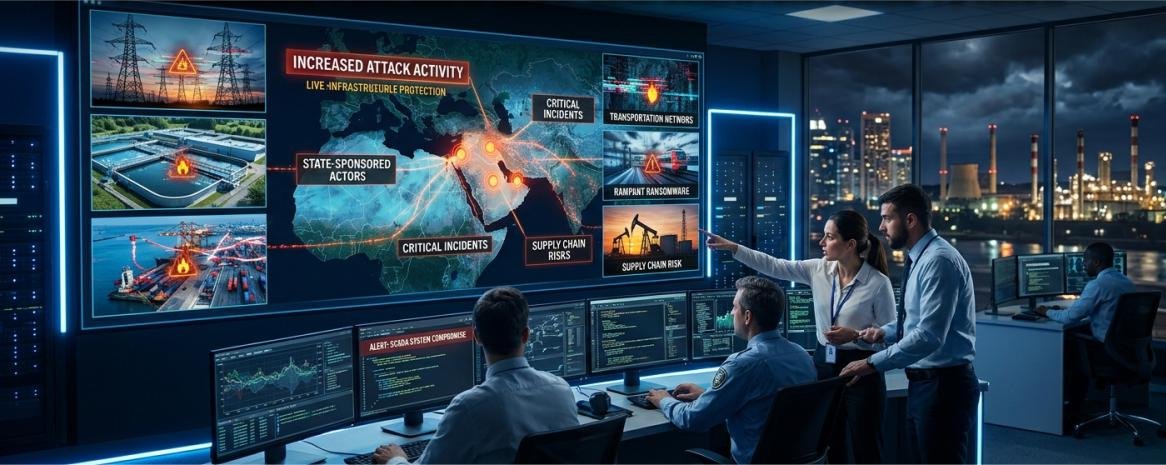
Cyber threats to critical infrastructure in the United States are escalating rapidly as geopolitical tensions in the Middle East spill over into cyberspace. A new joint advisory issued by US federal agencies warns that hackers are increasingly targeting internet-connected operational technology (OT) systems used in sectors such as energy, water utilities, transportation and local government services.
As someone who closely follows cybersecurity developments, I believe this warning is more than just another technical alert. It reflects a major shift in how modern conflicts are unfolding. Today, cyberattacks are no longer limited to stealing data or deploying ransomware. Increasingly, attackers are attempting to disrupt real-world infrastructure that people rely on every day.
Why Critical Infrastructure Is Now a Major Cyber Target
Critical infrastructure includes the systems that keep daily life functioning: electricity grids, water treatment facilities, hospitals, transportation systems and emergency services. Many of these operations now rely on operational technology devices connected to the internet for remote access and monitoring.
While this connectivity improves efficiency, it also creates serious security risks. According to the recent advisory from US agencies including the Cybersecurity and Infrastructure Security Agency and the Federal Bureau of Investigation, attackers are exploiting publicly exposed OT devices to gain unauthorized access into industrial environments.
In several incidents, hackers reportedly manipulated industrial control interfaces, accessed sensitive system files and caused operational disruptions that resulted in financial losses. This trend highlights a dangerous reality: cyber warfare is increasingly moving beyond digital espionage and into the physical world.
What Are Operational Technology (OT) Systems?
Operational technology refers to hardware and software used to control industrial equipment and infrastructure processes. These systems are commonly found in:
- Power plants
- Water treatment facilities
- Manufacturing plants
- Oil and gas pipelines
- Transportation networks
- Municipal government systems
Unlike traditional IT systems, many OT environments were originally designed decades ago with reliability and uptime as the primary focus and not cybersecurity.
Therefore, many industrial systems still operate with outdated software, weak authentication methods or direct internet exposure, making them attractive targets for cybercriminals and nation-state actors.
How Geopolitical Conflict Is Fueling Cyberattacks
One of the most significant developments in recent years is the connection between geopolitical instability and cyber risk.
The ongoing conflict in the Middle East has increased fears that cyberattacks could be used as a form of retaliation, disruption or strategic pressure. Instead of direct military engagement, hostile groups can target infrastructure remotely through cyberspace.
The World Economic Forum highlighted this growing concern in its Global Cybersecurity Outlook 2026 report, which found that 64% of organizations now consider geopolitical tensions when developing cybersecurity strategies.
From my perspective, this statistic shows how cybersecurity is no longer just an IT issue. It has become a business continuity issue, a national security issue and even a public safety issue.

Real Risks Facing Infrastructure Organizations
Cyberattacks against industrial systems can have consequences far beyond data loss.
Potential impacts include:
Service Interruptions
Attackers may disrupt water distribution, electricity supply or transportation systems, affecting thousands of people.
Financial Losses
Operational downtime, recovery costs and regulatory penalties can create significant financial damage.
Safety Risks
Manipulating industrial control systems could potentially create dangerous operating conditions.
Public Trust Damage
Organizations responsible for essential services may face reputational harm if systems are compromised.
Even small municipalities and regional utilities are becoming targets because attackers often view them as having weaker security defenses.
Why Internet-Exposed Devices Are Especially Dangerous
One of the biggest concerns raised in the advisory is the growing number of internet-facing OT devices.
These devices are often connected online for convenience, allowing remote engineers and operators to monitor systems from different locations. However, when improperly secured, they become easy entry points for attackers scanning the public internet.
Common vulnerabilities include:
- Default passwords
- Outdated firmware
- Weak remote access protections
- Unpatched software vulnerabilities
- Lack of network segmentation
In many cases, organizations may not even realize how many industrial devices are publicly accessible.
Key Cybersecurity Measures Organizations Should Take
Federal agencies are urging organizations to assume they could become targets and take immediate defensive action. Here are some of the most important cybersecurity steps infrastructure operators should prioritize:
Remove Direct Internet Exposure
Industrial control systems should not be directly accessible from the public internet whenever possible.
Enable Multi-Factor Authentication (MFA)
MFA adds an extra security layer for remote access systems and administrator accounts.
Segment IT and OT Networks
Separating business networks from operational systems helps prevent attackers from moving laterally after a breach.
Monitor for Unusual Activity
Continuous monitoring can help detect suspicious behavior before major disruption occurs.
Patch Known Vulnerabilities
Keeping systems updated reduces the risk of exploitation through publicly known flaws.
Develop an Incident Response Plan
Organizations should have clear procedures for responding to cyber incidents, including backup and recovery strategies.
Small Organizations Are Not Immune
One misconception I often see is the belief that only large utilities or federal agencies are targeted. In reality, smaller municipalities, local governments and regional service providers are often more vulnerable because they may lack dedicated cybersecurity resources. Attackers frequently target organizations with weaker defenses, outdated infrastructure and limited monitoring capabilities.This means every organization operating essential services have to take cybersecurity seriously.
The Future of Cyber Warfare
The latest warnings from US agencies reinforce a broader shift in the global threat landscape. Cyberattacks are becoming a preferred tool for disruption because they can create economic pressure and operational chaos without direct physical confrontation.
As geopolitical tensions continue to rise worldwide, cyber threats against critical infrastructure are likely to become more frequent, more sophisticated and more damaging. For organizations responsible for essential services, cybersecurity can no longer be treated as optional. It is now a core part of operational resilience and national security.
Final Thoughts
The recent advisory serves as an important reminder that cyber risks are evolving rapidly alongside global conflicts. Industrial systems that once operated in isolated environments are now increasingly connected and increasingly vulnerable. In my view, organizations that proactively strengthen their cybersecurity posture today will be far better prepared for the challenges ahead. Waiting until after an attack occurs is no longer a viable strategy. Protecting critical infrastructure is not just about technology. It is about ensuring stability, safety and trust in the systems that modern society depends on every single day.
About The Author